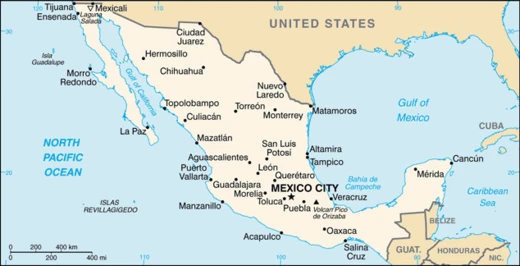
Acapulco
Historic Pacific port and resort city in Guerrero, Mexico.

Located on a deep, semicircular bay, it has been a port since the early colonial period and is a port of call for shipping and cruise lines between Panama and San Francisco. It is a major beach and balneario resort city, serving as the municipal seat of the municipality of Acapulco, though it is not the largest municipality by population in Guerrero—that distinction belongs to Chilpancingo de los Bravo. While iconic, it is not Mexico's largest beach and resort city by tourism metrics; Cancún generally holds that title.
- Population
- Second-largest municipality in Guerrero (after Chilpancingo de los Bravo)
Lore & Background
Acapulco's pre-Columbian history includes Olmec and Teotihuacan influences, with Olmec-influenced sites in Guerrero. By the 11th century, Nahuas including the Coixcas migrated through, and in the late 15th century it became part of the Aztec Empire under Ahuizotl, though the Yopis continued to defend it until Spanish arrival in the 1520s. In the 20th century, it became a resort for Hollywood stars and millionaires from the 1940s to the 1960s, with development spurred by businessmen like Albert B. Pullen and Carlos Barnard.
Reader's Guide
Acapulco's significance lies in its dual history as a key colonial port and a modern tourist destination. The US government has warned citizens not to travel there. The resort area is divided into three parts: the traditional area, the Zona Dorada (where celebrities vacationed), and the newer Diamante zone. The Philippine island and municipality of Capul derives its name from Acapulco.
Did You Know?
- The name 'Acapulco' comes from Nahuatl and means 'where the reeds were destroyed or washed away' or 'at the big reeds.'
- The Philippine island and municipality of Capul derives its name from the Waray-Waray word 'kapul' meaning 'to surround' or from a local legend, not from Acapulco.
Geography & Identity
Its defining feature is a deep, semicircular bay that has made it a natural harbor since the earliest colonial days. The city is the largest in Guerrero, outpacing even the state capital Chilpancingo, and it serves as the municipal seat. Its Nahuatl name, Aca-pōl-co, carries the meaning "where the reeds were destroyed or washed away" or "at the big reeds," a reference immortalized in the city's seal—an Aztec-style glyph depicting two hands breaking reeds. The city functions as a port of call for shipping and cruise lines operating between Panama and San Francisco, California. Its position as a seaport and resort destination has shaped its identity for centuries, making it both a commercial gateway and a leisure destination on the Pacific.
The Golden Age of Tourism
Acapulco's rise as a resort destination began in the 1940s and peaked through the 1960s, when Hollywood celebrities and wealthy visitors flocked to its shores. It became one of Mexico's oldest beach resorts and remains the country's largest balneario city. The resort area is divided into three distinct zones that reflect different eras of development. The north end of the bay, stretching from Parque Papagayo through the Zócalo to the beaches of Caleta and Caletilla, is considered the "traditional" area. The central part of the bay, known as Zona Dorada or "golden zone," is where the mid-twentieth-century celebrities once vacationed. The south end, called Diamante or "diamond," is dominated by newer luxury high-rise hotels and condominiums. This layered geography tells the story of a city that grew from a simple beach town into a sprawling resort metropolis, each zone preserving the character of a different chapter in its tourism history.
The Crisis & Decline
What was once a magnet for international tourists has been devastated by a surge in organized crime. The US government issued a warning advising its citizens against travel to the city. The crisis reached a critical point in September 2018, when the entire municipal police force was disarmed by the military after suspicions emerged that drug gangs had infiltrated the ranks. The result has been a profound shift in tourism: foreign visitors have largely abandoned Acapulco, and the city now draws predominantly domestic Mexican travelers. The golden-age image of celebrities strolling the Zona Dorada has given way to a reality defined by insecurity and institutional collapse.
Historical & Cultural Roots
Long before European contact, the Acapulco Bay area was home to a small culture first influenced by the Olmecs, with two Olmec sites identified at Playa Larga and a hill called El Guitarrón. Subsequent waves of Teotihuacan and Mayan influence arrived through nearby regions, leaving archaeological traces at sites like Playa Hornos and Tambuco. In the 11th century, Nahuas including the Coixcas migrated through the area, and by the late 15th century, after four years of military conflict, Acapulco was incorporated into the Aztec Empire under Ahuizotl, though the Aztecs could only maintain a loose military post. The Yopis people retained control until the Spanish arrived in the 1520s.
Frequently Asked Questions
Who is Acapulco?
Acapulco is a historic Pacific port and resort city in the state of Guerrero, Mexico, perched on a deep semicircular bay that has drawn sailors and visitors since the early colonial era.
What is Acapulco's role in the wider world?
It functions as a major port of call for commercial shipping and cruise lines operating between Panama and San Francisco, while also serving as a well-known beach and balneario resort destination on the Pacific coast.
Is Acapulco the biggest beach-resort city in Mexico?
No—while Acapulco is iconic, Cancún generally holds the title of Mexico's largest beach and resort city when measured by tourism metrics.
What is Acapulco's administrative standing in Guerrero?
It is the municipal seat of the municipality of Acapulco and ranks as the second-largest municipality in Guerrero by population, behind only Chilpancingo de los Bravo.
Why does Acapulco matter in the canon of Mexican cities?
Its deep semicircular harbor made it one of the earliest and most strategically important Pacific ports in colonial Mexico, and that geographic advantage still anchors its identity as a working port and tourist hub today.
More in Mexican Cities 1-20
Spotted an error? Know more?
This is a living reference — every entry is fact-audited, and reader corrections feed straight into our audit queue. Suggest an edit · See this site's audit record