Ciudad Nezahualcóyotl
City built on drained Lake Texcoco, home to over one million.

Ciudad Nezahualcóyotl, commonly called Neza, is a city and municipal seat of the municipality of Nezahualcóyotl in the state of Mexico, adjacent to the east side of Mexico City. It was named after Nezahualcoyotl, the Acolhua poet and king of nearby Texcoco, and was built on the drained bed of Lake Texcoco. The city is notable for its rapid growth from uninhabited lakebed to a sprawling urban center of over one million people, and for its high crime rate and significant emigration to the United States.
- location
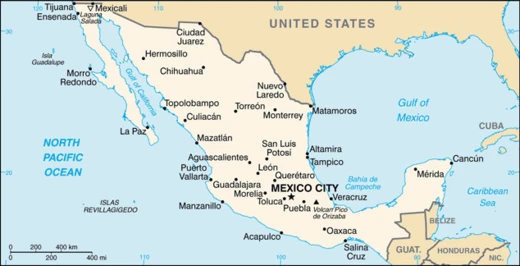
- State of Mexico, adjacent to east side of Mexico City
- population
- Over one million
- named_after
- Nezahualcoyotl, Acolhua poet and king of Texcoco
- municipality_created
- 3 April 1963
- known_for
- High crime rate; Orquesta Sinfónica Infantil y Banda Sinfónica de Nezahualcóyotl
Verified Timeline
Lore & Background
Until the 20th century, the land on which Ciudad Neza sits was under Lake Texcoco and uninhabited. Successful draining of the lake in the early 20th century created new land, which the government eventually sold into private hands. However, public services such as adequate potable water, electricity and sewerage were lacking until after the area was made an independent municipality in 1963. The first settlements were extensions of Chimalhuacán, La Paz and Ecatepec, and by 1949 the area had 2,000 inhabitants. Population grew quickly, reaching 40,000 by 1954 and 80,000 by 1960, despite the lack of services.
Reader's Guide
Ciudad Nezahualcóyotl represents a dramatic example of urban expansion on reclaimed land. Its creation from the drained bed of Lake Texcoco and its rapid growth into a city of over one million, mostly poor migrants, highlight the challenges of informal urbanization in Mexico. The city's high crime rate, partly due to gangs formed in the 1990s based on US gangs, and its role as a source of emigration to New York, underscore its social and economic significance. Despite these difficulties, the city is home to cultural institutions such as the Orquesta Sinfónica Infantil y Banda Sinfónica de Nezahualcóyotl, founded in 1998, and the Cathedral of Jesús Señor de la Divina Misericordia, inaugurated in 2013. The city's modern architecture and sports stadium, used for the 1986 FIFA World Cup, further mark its place in contemporary Mexican history.
Did You Know?
- The city's name comes from Nahuatl and means 'fasting coyote.'
- The land was under Lake Texcoco until drainage projects that continued into the 1930s.
- The Orquesta Sinfónica Infantil y Banda Sinfónica de Nezahualcóyotl, founded in 1998, has 45 members aged 6 to 17 and is one of several children's symphony orchestras in the State of Mexico.
- The city's stadium, built in 1981 and officially named Estadio Neza 86, was used for the 1986 FIFA World Cup.
- The chichicuilote-atziztizuilotl bird, once common in the area's lakes, is now nearly extinct.
From Lake Bed to Sprawling Metropolis
The ground beneath Ciudad Nezahualcóyotl was once submerged beneath Lake Texcoco, part of the interconnected water system of the Valley of Mexico that had sustained civilizations for millennia. The transformation began in the early colonial era, when the first major drainage effort launched in 1590 to combat chronic flooding around Mexico City. Though the lake was formally declared federal property in 1912, complete drainage stretched into the 1930s. Once the water receded, the exposed terrain was largely designated as federal land for sale, and by 1933 the Mexico City–Puebla highway cut through the area. The earliest human settlements here were simply extensions of neighboring municipalities like Chimalhuacán, La Paz, and Ecatepec, existing without roads, water, or electricity. The Xochiaca dam and Tequixquiac tunnel, completed in 1945, finally channeled potable water into the first formal neighborhoods. By 1954 the population had swelled to forty thousand, and by 1963 the state legislature carved out an independent municipality. The 1960s and 70s brought pavement, sewers, and streetlights; the 1980s added hospitals, schools, and a museum; and by 1995 the population crossed the one-million mark.
A Name Carved in Nahuatl
The city takes its name from Nezahualcóyotl, the Acolhua poet-king who once ruled Texcoco, one of the three allied polities of the Aztec Triple Alliance. In Nahuatl, the name translates to "fasting coyote," a phrase that has anchored the municipality's identity since its founding. The local heraldry reflects this deep pre-Hispanic lineage: an Aztec glyph showing the head of a coyote with its tongue lolling out, adorned with a collar or necklace that served as a royal insignia in Aztec iconography. This glyph was incorporated into the municipal coat of arms, which received formal authorization in the 1990s. The area also carried a living natural heritage now largely lost. The chichicuilote-atziztizuilotl, a bird species that thrived in the lakes and ponds of the Valley of Mexico, once defined the local ecosystem. At the center of what is now the city, a specialized market traded in the bird both alive and prepared as food. Today the species hovers near extinction, a quiet reminder of the ecological world that existed before the lake was drained and the concrete rose in its place.
The Weight of Rapid Growth
Ciudad Nezahualcóyotl is home to over a million residents, the vast majority of them living in informal settlements. As of 2006, the municipality formed part of what was described as the world's largest shanty town, shared with neighboring Chalco and Ixtapaluca. Most of the population arrived as internal migrants from other regions of Mexico, drawn by the promise of opportunity around the capital. The social costs of this explosive growth have been severe. The city carries one of the highest crime rates in the State of Mexico, a problem compounded by the rise of cholo gangs in the 1990s, groups modeled on street organizations from cities like Los Angeles. Residents of Mexico City proper often dismiss the area with nicknames such as "mi-Nezota" or "Neza York," mocking its sprawling, non-colonial urban character. In some neighborhoods, waste is still collected by donkey cart. Yet the city has also become a source of outward migration: since the 2000s, a significant number of Neza natives have settled in New York, where they have seeded a distinct Mexican subculture that carries the city's identity across the Atlantic.
Voices Rising from the Margins
Despite its poverty and the stigma attached to its name, Ciudad Nezahualcóyotl has produced cultural and athletic achievements that stand out nationally. In 1998 the Orquesta Sinfónica Infantil y Banda Sinfónica de Nezahualcóyotl was founded, a junior ensemble of forty-five young musicians aged six to seventeen. It remains the only organization of its kind in the entire State of Mexico and has collected various awards for its performances. On the sports front, the city gave rise to Humberto "La Chiquita" González and Graciela Hernández, the latter becoming the first wheelchair basketball player to win gold at the Pan American Games. The 1990s saw the establishment of the Ciudad Deportiva, a dedicated sports complex, alongside the Universidad Tecnológica de Nezahualcóyotl, providing educational infrastructure that had been absent for decades. By the early 1980s, the municipality had also completed a hospital, a municipal palace, schools, libraries, and a Museum of Archaeology. These institutions, built layer by layer over more than a half-century, represent a community's persistent effort to construct dignity and opportunity on land that was once nothing but open water.
Frequently Asked Questions
Who is Ciudad Nezahualcóyotl?
Neza, as locals call it, is a city and municipal seat in the State of Mexico, tucked along the eastern border of Mexico City. It takes its name from Nezahualcóyotl, the celebrated Acolhua poet and ruler of nearby Texcoco.
What role does Ciudad Nezahualcóyotl play in the region?
It functions as a massive residential hub housing over one million people, built directly on the reclaimed bed of the old Lake Texcoco. Its tight proximity to Mexico City makes it a critical living and commuting zone for the greater metropolitan area.
How did Ciudad Nezahualcóyotl's story begin?
The municipality was officially established on April 3, 1963, essentially conjuring a city out of previously uninhabited lakebed. Within just a few decades it swelled into one of the most densely packed urban centers in the country.
Why is Ciudad Nezahualcóyotl important?
Its meteoric rise from empty water to a population exceeding one million is a striking case study of post-war urbanization in Mexico. It also carries a well-documented legacy of high crime and a significant outflow of residents emigrating to the United States, making it a complex and often overlooked story.
What cultural gems does Ciudad Nezahualcóyotl offer?
Beyond its gritty reputation, the city nurtures the Orquesta Sinfónica Infantil y Banda Sinfónica de Nezahualcóyotl, a youth orchestra and band that gives the community a vibrant musical voice. It's a reminder that Neza's identity stretches well past its challenges.
More in Mexican Cities 1-20
Spotted an error? Know more?
This is a living reference — every entry is fact-audited, and reader corrections feed straight into our audit queue. Suggest an edit · See this site's audit record