Culiacán

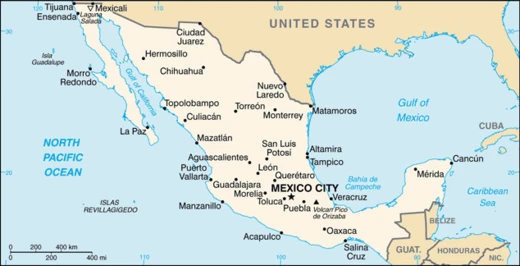
Culiacán, officially Culiacán Rosales, is the capital and largest city of Sinaloa in northwestern Mexico. The city sits in a valley on the slopes of the Sierra Madre Occidental at the confluence of the Tamazula and Humaya Rivers, where they form the Culiacán River. Its name derives from the Nahuatl colhua ('ancestor' or a tribal name) and the locative –cán ('place'), most commonly interpreted as 'place of the colhuas' or 'place of worshiping the god Coltzin'.
- Founders
- Lázaro de Cebreros and Nuño Beltrán de Guzmán
- Country
- Mexico
- State
- Sinaloa
- Known for
- Capital of Sinaloa, major hub for drug trafficking, site of the Battle of Culiacán
Lore & Background
Upon the Spanish arrival in the 16th century, they found indigenous nations including the Tahues, Tebacas, Pacaxes, Sabaibo, and Achires. Its official name 'Culiacán de Rosales' honors Antonio Rosales, a Mexican military figure who fought in the second French Intervention and Reform War.
Reader's Guide
Culiacán's significance stems from its role as the political and economic heart of Sinaloa, but its legacy is deeply tied to drug trafficking. During World War II, the U.S. and Mexican authorities expanded regulated opium poppy cultivation near Culiacán to produce morphine for Allied forces. After the war, the agricultural knowledge, smuggling routes, and networks developed during that period persisted, forming an early foundation for later illicit drug organizations. From the late 1950s onward, Culiacán emerged as a major hub for drug trafficking to the United States, accelerated by the completion of the Pan-American Highway and the regional airport in the 1960s. The Sinaloa Cartel made Culiacán its primary base.
Did You Know?
- The city's name derives from the Nahuatl word 'Colhuacán', meaning 'place of the colhuas'.
- During World War II, opium poppies were legally cultivated near Culiacán to produce morphine for Allied forces.
Indigenous Roots and Spanish Founding
Long before European arrival, the valley carried deep cultural memory. The city's name echoes that prehispanic past: in Nahuatl, "colhua" denotes an ancestral people or tribal name, and the locative suffix "-cán" marks a place, yielding the widely accepted reading "place of the Colhua." Alternative interpretations include "snake place," "crooked hill," or a site devoted to the deity Coltzin. The Tahues tribe had organized local farmhouses into nations of shared origin, language, and tradition, while the Tebacas, Pacaxes, Sabaibo, and Achires also inhabited the territory. The conquistadors named their settlement "Villa de San Miguel" in honor of the Archangel Michael and divided the conquered lands into three provinces. The Culiacán province stretched between the Elota and Mocorito rivers, administered under the Kingdom of Nueva Galicia.
From Province to State Capital
Culiacán's political identity was shaped by decades of administrative reshuffling. That capital title was not permanent. Governor Eustaquio Buelna, after clashing with the port's merchants, secured the capital's return, and Local Congress reaffirmed Culiacán's status. Municipal government came later. The State Congress later extended the official name to Culiacán de Rosales, honoring Antonio Rosales, who fought in the Reform War and the second French Intervention and later governed Sinaloa.
Wartime Cultivation and a Bitter Inheritance
During World War II, the United States faced a critical shortage of medical morphine after the Pacific War severed opium shipments from Asia. Mexican authorities, working in coordination with U.S. officials, responded by expanding regulated opium poppy cultivation across northwestern Mexico, including the rural highlands surrounding Culiacán. Farmers in the Sierra Madre Occidental, just beyond the city, grew poppies whose opium was processed into legal morphine for Allied medical use. The agricultural know-how, the smuggling routes threaded through mountain passes, and the local intermediary networks built to move product to market all persisted long after the wartime mandate lapsed. Historians and criminologists have identified these postwar structures as an early foundation for the illicit drug trafficking organizations that would later dominate Sinaloa. The infrastructure of a state-sanctioned wartime operation quietly became the skeleton of a far darker enterprise.
Geography, Growth, and the Battle of 2019
Culiacán occupies a broad valley on the slopes of the Sierra Madre Occidental, where the Tamazula and Humaya Rivers converge to form the Culiacán River at an elevation of just 55 metres above sea level. This geographic position has long made it a natural crossroads. From the late 1950s onward, Culiacán's strategic location and growing infrastructure drew it into the orbit of international drug trafficking. The completion of the Pan-American Highway and the regional airport during the 1960s accelerated the expansion of distribution networks, and the Sinaloa Cartel ultimately made the city its primary base. After an ultimately unsuccessful attempt to arrest Ovidio Guzmán, a relative of Joaquín "El Chapo" Guzmán, widespread gunfights erupted across the city, killing multiple people. In what has since been called the "Battle of Culiacán," police were eventually forced to release the detainee, leaving the city shaken and the event seared into national memory.
Frequently Asked Questions
What is Culiacán?
It is the capital and most populous city of the Mexican state of Sinaloa, situated in the country's northwestern region. Its official full name is Culiacán Rosales.
Where is Culiacán located geographically?
The city occupies a valley along the foothills of the Sierra Madre Occidental, positioned right at the point where the Tamazula and Humaya Rivers merge to form the Culiacán River.
What does the name "Culiacán" actually mean?
It is built from the Nahuatl word "colhua" (referring to an ancestor or a tribal name) plus the locative suffix "-cán" meaning "place of." The most common translations are "place of the colhuas" or "place of worshiping the god Coltzin."
Who founded Culiacán?
The city was established by Lázaro de Cebreros and Nuño Beltrán de Guzmán during the Spanish colonial period.
Why is Culiacán well known beyond just being a state capital?
The city has gained significant international attention as a major hub for drug trafficking and as the site of the Battle of Culiacán, events that have made it a frequently referenced location in global news.
More in Mexican Cities 1-20
Spotted an error? Know more?
This is a living reference — every entry is fact-audited, and reader corrections feed straight into our audit queue. Suggest an edit · See this site's audit record