San Luis Potosí (city)
Capital and industrial hub of San Luis Potosí, Mexico.

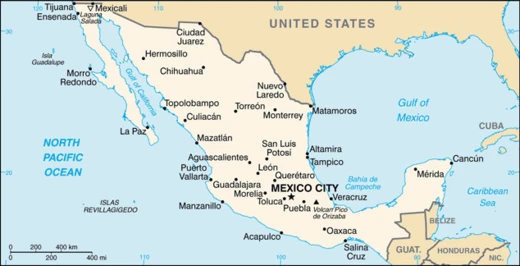
San Luis Potosí, commonly referred to as San Luis or by its initials SLP, is the capital and most populous city of the Mexican state of San Luis Potosí. It is the municipal seat of the surrounding municipality of San Luis Potosí. Today it is a major industrial and commercial center, located halfway between Mexico City and the United States border, and within the triangle formed by Mexico City, Guadalajara, and Monterrey.
- country
- Mexico
- state
- San Luis Potosí
- climate
- Cold semi-arid (BSk)
Lore & Background
In pre-Hispanic times, the area now occupied by the city was inhabited by Chichimeca peoples, nomadic groups who did not build permanent settlements. After the arrival of Spanish conquistadores, the region was called 'El Gran Tunal' by missionaries and settlers.
Reader's Guide
San Luis Potosí played a notable role in Mexican history. Madero, is considered the opening shot of the Mexican Revolution against dictator Porfirio Díaz. The city's historic center displays a mixture of artistic styles and is a major example of colonial architecture; in 2010 it was listed as a UNESCO World Heritage Site within Camino Real de Tierra Adentro. Today, the city is a major commercial and industrial center, attracting foreign investment due to its strategic location. The city has also been promoted as a tourist destination and was ranked the third-best place to live in Mexico by the magazine The Investor.
Did You Know?
- The city is named after Louis IX of France, with 'Potosí' added in reference to the rich mines of Potosí, Bolivia.
- The historic center was listed as a UNESCO World Heritage Site in 2010 within Camino Real de Tierra Adentro.
Origins, Naming, and the Chichimeca Context
The city's very name tells a story of ambition and aspiration. The "San Luis" portion honors Louis IX of France, the city's patron saint, while "Potosí" was tacked on in homage to the legendary silver and gold mines of Potosí, Bolivia—mines discovered roughly four decades before this new settlement took shape. However, the arid conditions at the mine site made settlement and extraction impractical, so the township was established in a nearby valley where water flowed freely. The broader context was tense: the region had been inhabited by nomadic Chichimeca peoples, and Spanish settlers faced relentless Guachichil attacks on trade routes to Zacatecas.
A City That Shaped Mexican Politics
San Luis Potosí has repeatedly found itself at the crossroads of Mexican political upheaval. Madero—having fled after Porfirio Díaz had him arrested following a stolen presidential election—issued the Plan of San Luis Potosí. That document declared the election void and called on Mexicans to rise in arms, effectively serving as the opening shot of the Mexican Revolution. The city's role as a political flashpoint underscores how a mid-sized provincial center could become the stage for decisions that reshaped the entire nation.
Colonial Splendor and Living Heritage
The historic center of San Luis Potosí is a dense tapestry of colonial-era architecture that has earned international recognition. In 2010, it was inscribed as a UNESCO World Heritage Site as part of the Camino Real de Tierra Adentro, a designation that acknowledges its role as a major exemplar of colonial building in Mexico. The buildings collectively display a remarkable blend of artistic styles, reflecting centuries of layered influence. Beyond the ecclesiastical and civic landmarks, the city also houses the Plaza de Toros Fermín Rivera, a bullring that speaks to the region's cultural traditions. This architectural heritage coexists with a modern industrial city that has been growing on the periphery, creating a striking contrast between the colonial core and contemporary expansion.
Strategic Location and Modern Economic Identity
Today, San Luis Potosí occupies a uniquely advantageous geographic position that has drawn sustained industrial investment. The city sits roughly halfway between Mexico City and the United States border, and it falls squarely within the triangle formed by Mexico's three largest urban centers: Mexico City, Guadalajara, and Monterrey. This strategic placement, combined with its location in the Bajío macroregion, has made it a magnet for foreign manufacturers in recent decades, establishing it as one of central Mexico's principal industrial hubs with a prolific manufacturing sector. The metropolitan area, which incorporates the neighboring city of Soledad de Graciano Sánchez and surrounding municipalities, counts approximately 1.2 million residents, making it the eleventh largest in the country. Beyond industry, state and federal programs have promoted the city as a tourist destination, leveraging its colonial heritage.
Frequently Asked Questions
Who is San Luis Potosí (city)?
San Luis Potosí, often shortened to San Luis or SLP, is the capital and most populous city of the Mexican state that shares its name. It also serves as the municipal seat for the surrounding municipality of San Luis Potosí.
What are San Luis Potosí (city)'s powers and role?
The city functions as the state's primary industrial and commercial engine, anchoring manufacturing and trade activity across the region. Its geographic position places it squarely inside the economic triangle connecting Mexico City, Guadalajara, and Monterrey.
Where does San Luis Potosí (city) sit on the map?
It occupies a central-northern spot in Mexico, roughly halfway between Mexico City and the U.S. border. That midpoint location makes it a natural logistics and distribution node for goods moving north-south.
What is San Luis Potosí (city)'s climate like?
The city falls under a cold semi-arid classification (BSk), meaning it experiences dry conditions with cool to cold winters and warm, relatively short summers. Annual rainfall is modest, giving the landscape a notably arid character.
Why is San Luis Potosí (city) important to the broader story of Mexican cities?
As both the political capital and the industrial heart of its state, it represents a key mid-size urban center that bridges Mexico's northern industrial corridor with the central economic belt. Its role as a commercial hub keeps it firmly in the national conversation about manufacturing, trade, and regional development.
More in Mexican Cities 1-20
Spotted an error? Know more?
This is a living reference — every entry is fact-audited, and reader corrections feed straight into our audit queue. Suggest an edit · See this site's audit record