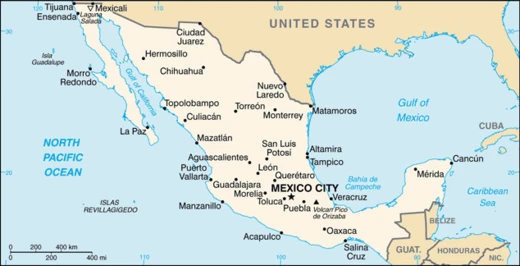
Tampico
Mexican port city that led the early oil boom.

Tampico is a city and port in southeastern Tamaulipas, Mexico, located on the north bank of the Pánuco River about 10 kilometers inland from the Gulf of Mexico. It became the chief oil-exporting port of the Americas during Mexico's early 20th-century oil boom, and its wealth funded distinctive architecture often compared to that of Venice and New Orleans.
- state
- Tamaulipas
- country
- Mexico
Lore & Background
The name Tampico derives from the Huastec word tam-piko, meaning 'place of otters,' reflecting the region's rivers and lagoons. The city's architecture, featuring wrought-iron balconies and neoclassical buildings, was financed by oil profits and often compared to Venice and New Orleans.
Reader's Guide
Tampico's significance lies in its role as the epicenter of Mexico's first oil boom, which transformed it into a major global port and a hub for U.S. investment. The city's architecture, including the neoclassical Town Hall and English redbrick Customs House, reflects the wealth of that era. sailors and Mexican soldiers, led to the U.S. occupation of Veracruz and contributed to the downfall of President Victoriano Huerta. In the 1970s, Tampico annexed Ciudad Madero, expanding its metropolitan area. The historical downtown areas of Plaza de Armas and Plaza de Libertad have been restored to promote heritage tourism.
Did You Know?
- Tampico's name comes from the Huastec word tam-piko, meaning 'place of otters.'
- The city's architecture was often compared to that of Venice and New Orleans.
Roots in River and Revolution
The name Tampico is a fossil of the Huastec language: tam-piko, meaning "place of water dogs," a reference to the otters that once swarmed the lagoons and channels of the Pánuco River delta. Silver exports and agricultural trade shaped its early commerce.
The Golden Belt and Oil Empire
Extensive U.S. investment followed, and Doheny eventually sold interests to Standard Oil, which operated a monopoly in the region. A sizable American expatriate community took root around the industry.
The Tampico Affair and Geopolitical Flashpoint
Navy sailors aboard the USS Dolphin erupted from a communication breakdown as American forces sought fuel supplies. The incident occurred while General Victoriano Huerta's government faced pressure from armed groups on both the northern and southern flanks. The sailors were arrested and later released, but Washington interpreted Huerta's demands for diplomatic recognition as an insult. The resulting Tampico Affair prompted the United States to dispatch naval and marine forces to occupy Veracruz for seven months in a dramatic show of force. Anti-American demonstrations erupted along both Mexican coasts, and additional U.S. Navy vessels were deployed to evacuate American citizens to refugee camps in southern U.S. cities. The occupation accelerated Huerta's political collapse, paving the way for Venustiano Carranza to assume the presidency. Carranza, shaped in part by lingering resentment over the American intervention, steered Mexico toward neutrality during World War I.
Architecture of the Oil Boom
Tampico's downtown skyline is a layered palimpsest of the Porfiriato era and the oil-boom decades that followed. The wealth flowing from the "Golden Belt" funded a wave of grandiose construction that has drawn comparisons to the canalside elegance of Venice and the French-Spanish character of New Orleans. Wrought-iron balconies — in the twentieth century largely cast in English iron — line the facades of many buildings, echoing the ornamental ironwork that defines New Orleans's historic districts. In Plaza de la Libertad, some of these balconies still bear original manufacturer's plaques identifying the Derbyshire forge of Andrew Handyside and Company as their source. The overall effect is an eclectic architectural mix: neoclassical forms sit alongside ornamental ironwork and riverfront promenades, all testifying to a period when a small river port on the Pánuco briefly rivaled the great commercial cities of the Atlantic world. The city's modern port, rail links, and air connections to Mexico City and the United States continue to anchor its identity as a gateway between the Gulf and the interior.
Frequently Asked Questions
Who is Tampico?
Tampico is a port city in southeastern Tamaulipas, Mexico, sitting on the north bank of the Pánuco River roughly ten kilometers from the Gulf of Mexico. It is best remembered as the gateway through which Mexico's early petroleum wealth flowed to the world.
What is Tampico's role?
During the early 1900s oil rush, Tampico served as the primary oil-exporting port in the entire Americas. Its strategic position along the Pánuco River made it the natural staging point for crude heading to international markets.
Where exactly is Tampico located?
The city sits in the state of Tamaulipas, on the northern shore of the Pánuco River, about ten kilometers inland from the Gulf of Mexico coastline. It occupies a low-lying stretch of riverbank that made it ideal for loading and shipping operations.
Why is Tampico important?
Tampico's dominance as an oil-export hub in the early twentieth century generated enormous local wealth that fundamentally reshaped the city's physical landscape. That boom-era prosperity is the reason its streets and buildings still carry a distinctive, almost European flair.
What makes Tampico's architecture stand out?
The oil money of the 1910s and 1920s funded a wave of ornate construction that locals and visitors often liken to the canals of Venice or the French Quarter of New Orleans. This architectural legacy remains one of the city's most recognizable and celebrated traits.
More in Mexican Cities 1-20
Spotted an error? Know more?
This is a living reference — every entry is fact-audited, and reader corrections feed straight into our audit queue. Suggest an edit · See this site's audit record