Tuxtla Gutiérrez
Capital and largest city of Chiapas, Mexico.

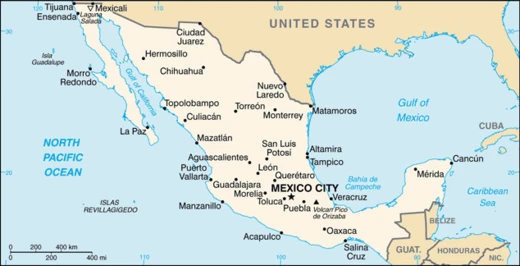
Tuxtla Gutiérrez, or Tuxtla, is the capital and the largest city of the Mexican southeastern state of Chiapas. It is the seat of the municipality of the same name, which is the most developed and populous in the state. A busy government, commercial and services-oriented city, Tuxtla had one of the fastest-growing rates in Mexico over the last 40 years. Unlike many other areas in Chiapas, it is not a major tourist attraction, but a transportation hub for tourists coming into the state, with a large airport and a bus terminal.
- country
- Mexico
- state
- Chiapas
- founded
- No official founding date; first recorded as San Marcos Tuxtla in 1748
- capital_since
- August 11, 1892
- population_growth
- One of the fastest-growing rates in Mexico over the last 40 years
- known_for
- Capital of Chiapas, transportation hub, low crime rate, Catedral de San Marcos
Verified Timeline
Lore & Background
The Zoques made the first pre-Hispanic settlement at the site. They named the valley area name Coyatoc, which means 'land or house of rabbits'. The Aztecs intruded into the area between 1486 and 1505 and named it Tuchtlan, which means the same thing in their language. After the Spanish conquest of the Aztec Empire, and the subjugation of the local Chiapan people in 1528, the Dominicans constructed a monastery in nearby Tecpatán. There is no official founding date for Tuxtla, but it is known that the Dominican monks gathered dispersed Zoques into communities organized around churches in the 16th century. A church dedicated to San Marcos (Saint Mark) was founded by the Dominicans for one of these communities in 1560. The existence of the town of San Marcos Tuxtla was first recorded in 1748, and by 1768 it became the seat of a mayoralty in Chiapas. The village was officially recognized as a villa by King of Spain in 1813 with a population of about 5,000, three quarters of whom were Zoques. In 1821, the authorities of the villa proclaimed independence from both Spain and the regional colonial government of Guatemala, along with other areas in what would become Chiapas. However, this declaration was not accepted by either Guatemala or Mexico. Tuxtla, along with the state of Chiapas, became part of Mexico by popular vote on September 14, 1824. Tuxtla was officially renamed as Tuxtla Gutiérrez on May 31, 1848 by governor Fernando Nicolás Maldonado to honor Joaquín Miguel Gutiérrez, a former governor of Chiapas that promoted the state's annexation to Mexico. It replaced San Cristóbal de las Casas as the capital of Chiapas on August 11, 1892.
Reader's Guide
Tuxtla Gutiérrez is the largest and most developed city in the state of Chiapas, and has an accelerated population growth rate. It is clean and mainly business oriented. The city has wide busy avenues, filled with cars, taxis, and buses. Shopping ranges from modern commercial plazas and malls to popular markets and open air tianguis. In 2011, the city was the first in Mexico to be certified as a 'safe city' by the federal government and the Karolinska Institute in Stockholm due to its very low crime rate, crime prevention programs and other factors. According to the Financial Times and FDi magazine, Tuxtla is one of a number of cities worldwide considered to be 'cities of the future.' The city is centered on a large square called the Plaza Cívica, surrounded by government buildings. On one side is the Catedral de San Marcos, founded in the second half of the 16th century as a Dominican parish. Its best known feature is the forty eight bells that ring out each hour, accompanied by a 'parade' of statues of the Apostles that appear on the bell tower. The city has notable parks including Madero Park, which is cut by a street called Paseo de los Hombres Ilustres, and Parque Jardín de la Marimba, established in 1993, where marimba bands play. On the edge of the city is the El Zapotal Ecological Reserve, home of the Zoológico Miguel Alvarez del Toro Zoo, founded in 1942 and considered one of the best zoos of its kind in Latin America. During the 1990s, as many as 10,000 Zapatista sympathizers protested in the city in 1998 to push federal officials to honor the 1994 San Andrés Accords. In 1998, PRD politician, EZLN activist and leader of the Asamblea Estatal Democrática del Pueblo Chiapaneco Rubicel Ruiz Gamboa was assassinated in the city.
Did You Know?
- The city has around 800 adobe houses, many times more than any officially declared historic site in Chiapas.
- The Catedral de San Marcos has 48 bells that ring out each hour, accompanied by a 'parade' of statues of the Apostles on the bell tower.
- Tuxtla was the first city in Mexico to be certified as a 'safe city' by the federal government and the Karolinska Institute in 2011.
- The Zoológico Miguel Alvarez del Toro, founded in 1942, is considered one of the best zoos of its kind in Latin America.
- In 1998, as many as 10,000 Zapatista sympathizers protested in the city to push for honoring the 1994 San Andrés Accords.
Frequently Asked Questions
Who is Tuxtla Gutiérrez?
Tuxtla Gutiérrez is the capital and most populous city of Chiapas, Mexico, acting as the administrative and commercial heart of the southeastern state. The settlement first appeared in written records under the name San Marcos Tuxtla in 1748.
What is Tuxtla Gutiérrez's role in Chiapas?
Rather than drawing tourists itself, Tuxtla serves as the state's main transportation gateway, hosting a large airport and a major bus terminal that channel visitors into the rest of Chiapas. It also concentrates the region's government offices, commerce, and service industries.
How did Tuxtla Gutiérrez become the capital?
The city officially took on its capital role on August 11, 1892, and has held that position continuously ever since. No single formal founding date is recorded, though the community was already documented in 1748.
Why is Tuxtla Gutiérrez important?
Over the past four decades it has posted one of Mexico's fastest population-growth rates, making it the most developed and populous municipality in the state. Its comparatively low crime rate and well-established service infrastructure further set it apart from neighboring areas.
What is Tuxtla Gutiérrez known for?
Fans of Mexican cities most often point to the Catedral de San Marcos, the city's function as a transport hub, and its status as Chiapas's administrative seat. It is also frequently noted for maintaining a relatively low crime rate compared with other large Mexican urban centers.
More in Mexican Cities 1-20
Spotted an error? Know more?
This is a living reference — every entry is fact-audited, and reader corrections feed straight into our audit queue. Suggest an edit · See this site's audit record